
Blog • May 23, 2024
Québec Highway Safety Code: the rules to follow on a bike
Like all other road users, cyclists must follow certain safety rules to ride with peace of mind. Have you thought about reviewing Québec’s Highway Safety Code before heading out? Here’s a short reminder to help you ride safely wherever cyclists are allowed.
Where is a cyclist allowed to ride?
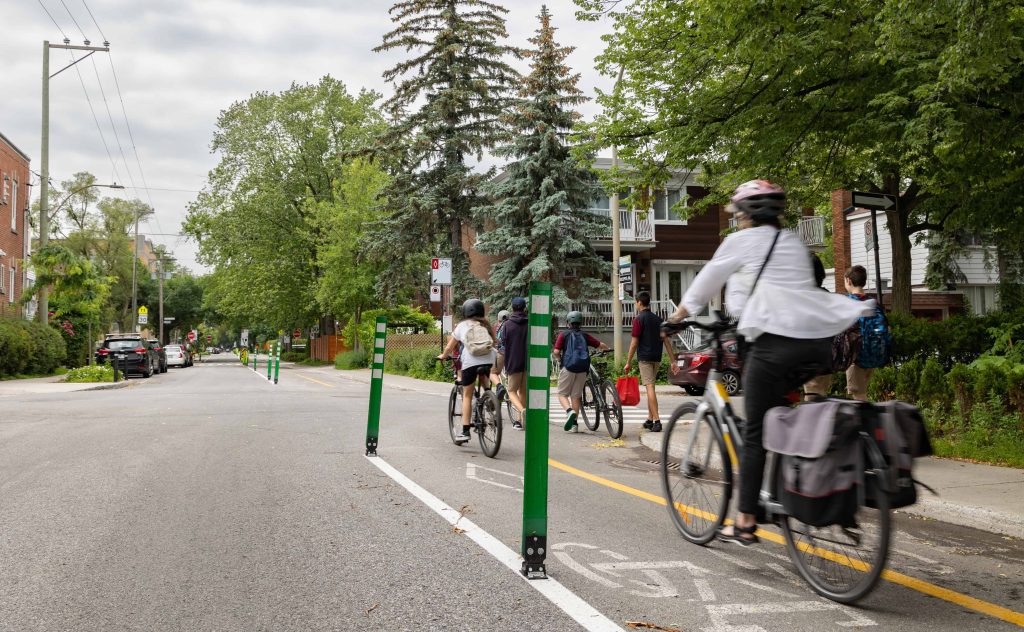
In Québec, cyclists may ride on most roads used by pedestrians and drivers, except on highways and where signs prohibit access. Riding a bike on the sidewalk is also prohibited, unless it’s necessary or posted signs allow it.
When you’re not on a bike path, keep as close as possible to the right side of the road, in the same direction as traffic. This keeps you more visible to drivers and reduces the risk of accidents. It will also be easier to signal your intentions when you need to turn.
How to signal your intentions on a bike?
When riding, it’s important to clearly signal your intentions before making a manoeuvre. If you want to turn, make a movement with one arm that pedestrians and drivers can easily see. We also recommend making eye contact with nearby drivers to be sure they’ve seen you before you move.
Before turning left, for example, hold your left arm out horizontally. You can do the same with your right arm for a right turn, or hold your left forearm up vertically so your arm forms the letter L. To signal that you’re stopping or slowing down, bend your left forearm downward.
What to do at intersections with no signals?
When you approach an intersection with several stop signs, remember to slow down and come to a complete stop before the stop line. Under Québec’s Highway Safety Code, the first person to come to a complete stop has the right of way if there are no lights or signs in place. Of course, it’s very important to make eye contact with other road users before entering the intersection.
For safety, we also recommend looking behind you to check whether a vehicle is about to pass you. Some drivers in a hurry can make sudden moves that might surprise you or even injure you seriously. Be ready to slow down or swerve if needed.
Stay alert at all times
Besides following the rules, it’s also very important to stay alert on your bike, especially in the city. Places such as driveways, parking lots and sidewalks can be dangerous for cyclists, as they’re often where collisions happen. Watch out for car doors opening suddenly and vehicles backing up.
Since you’re vulnerable on a bike, it’s also very important to watch out for heavy vehicles, which need a longer distance to brake because of their weight. Keep enough distance so you’re not in one of their blind spots. That way, the driver can see you at all times, which greatly reduces the risk of accidents.
Don’t forget your reflectors and lights
The Highway Safety Code requires reflectors on your bike: white in front, red at the back, on the pedals and on the spokes. At night, you also need a white headlight in front and a red light at the back. Most new bikes come with reflectors; if any are missing, our shop has them in stock and the repair shop installs them.
To be even more visible, add reflective strips to your frame, ankles or shoes. A bell isn’t mandatory, but it prevents plenty of close calls with pedestrians.
Have your bike checked at Cyclo Services
Prevention also means a bike in good condition. Our repair shop checks brakes, gears and lights, and our guided tours show you the city on safe paths, with a guide who knows the rules and the routes.
Go with a guide
3 to 5-hour tours in small groups, from 289 rue Saint-Paul.